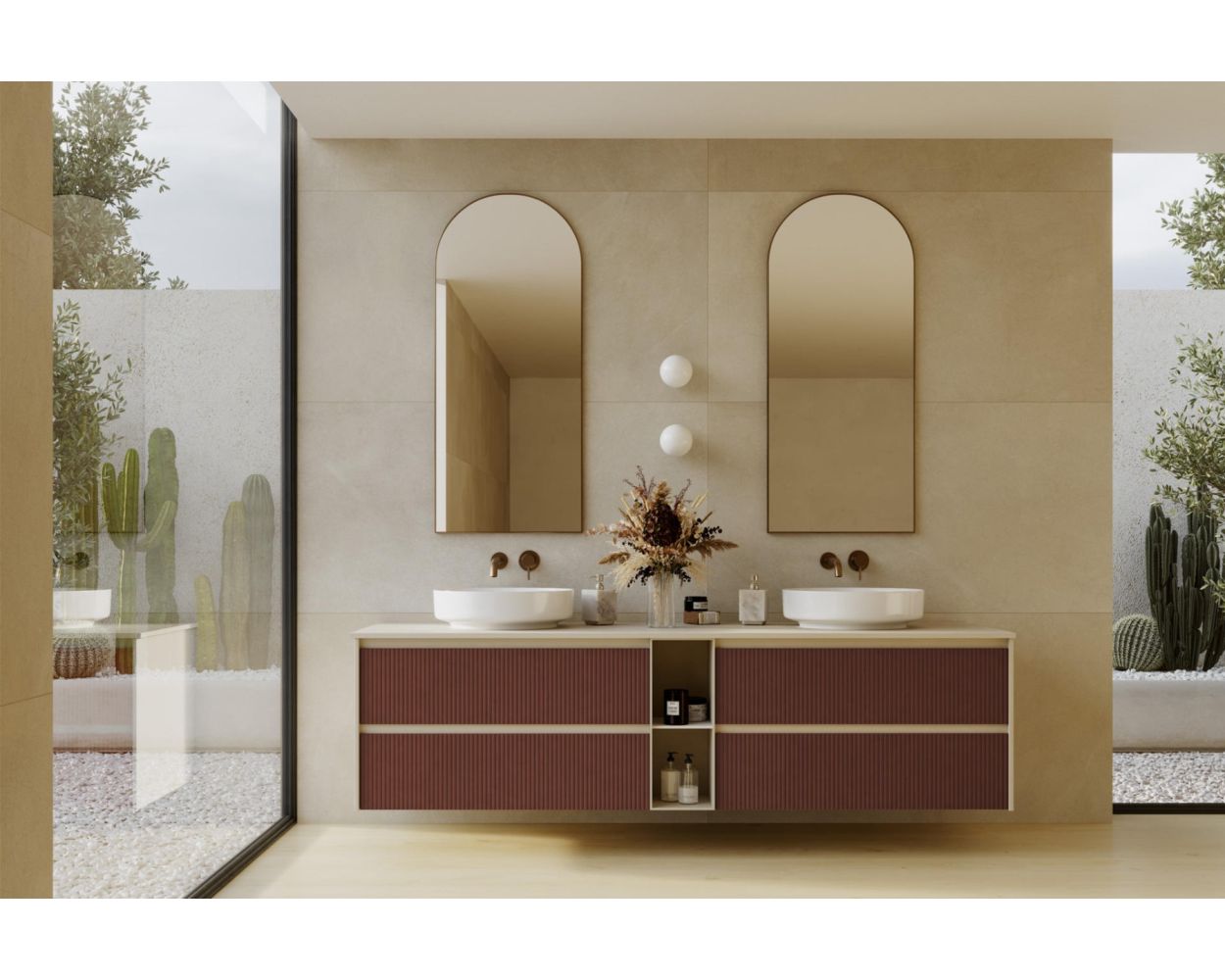
FLUTE Reeded Wall Panels in Soft Touch Lacquer
The Rounded Profile That Defines Reeded Design
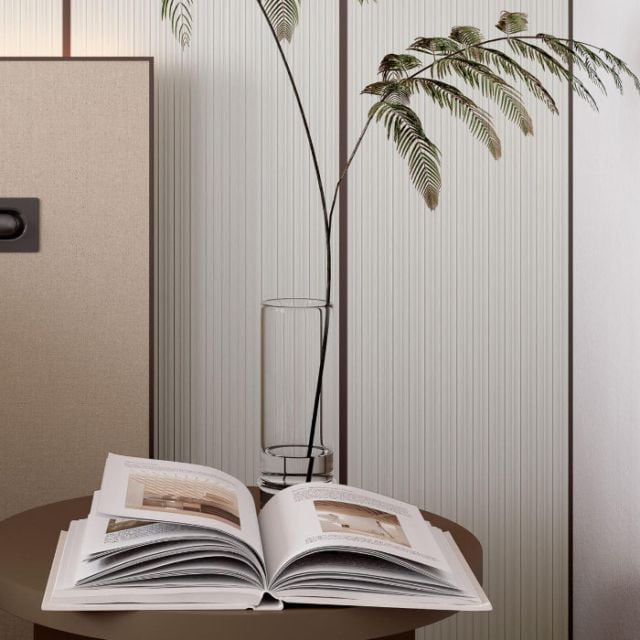
Reeded surfaces use convex half round ridges set edge to edge, a softer cousin of the fluting carved into classic columns and moulding. On the Flute pattern each ridge has a rounded top and a shallow valley, so the surface reads as one continuous wave rather than a series of cuts. The effect is calm and tactile, which is why reeded fronts dominate current furniture and millwork design.

Reeded MDF Without the Painting
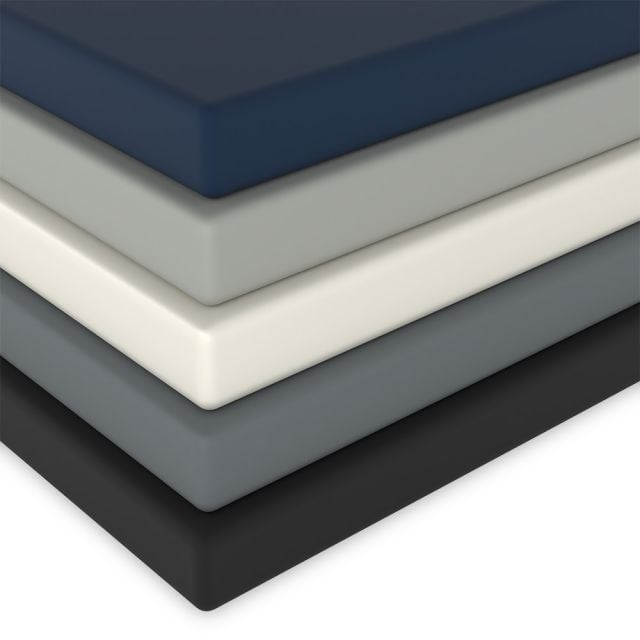
Most reeded MDF sold today arrives raw or primed, which leaves days of finishing work and a rounded profile that roller work struggles to coat evenly. Flute panels ship lacquered in your chosen RAL color with the Soft Touch topcoat already cured, wrapping every ridge in one even layer. The 207 color range covers whites, naturals, and deep saturated tones.












Visit our Complete RAL Color Chart, to see all available colors
From Accent Walls to Cabinet Fronts
The pattern works on feature walls, headboard walls, kitchen islands, bathroom vanity fronts, and wardrobe doors. Because the core is engineered wood fiber rather than solid wood, panels stay flat across wide spans and take precise cuts around outlets and corners. White oak and walnut reeded furniture set the trend, but a lacquered color surface ties a room together in a way grain patterns cannot always do.
Fluted or Reeded, Which One Fits Your Wall
The two terms describe opposite profiles. Fluted surfaces carry flat or concave channels cut below the face, while reeded surfaces raise rounded ridges above it. If you want sharper shadow lines, see the Cannettato fluted pattern. If you want the softer, furniture grade feel, Flute is the reeded choice. Our guide comparing reeded and fluted paneling covers the decision in detail.
What is the difference between fluted and reeded panels?
| Surface | Textured, Matte |
|---|---|
| Color Tone | Black, Blue, Brown, Dark, Golden, Green, Grey, Light, Purple, Red, White |









You may also be interested in