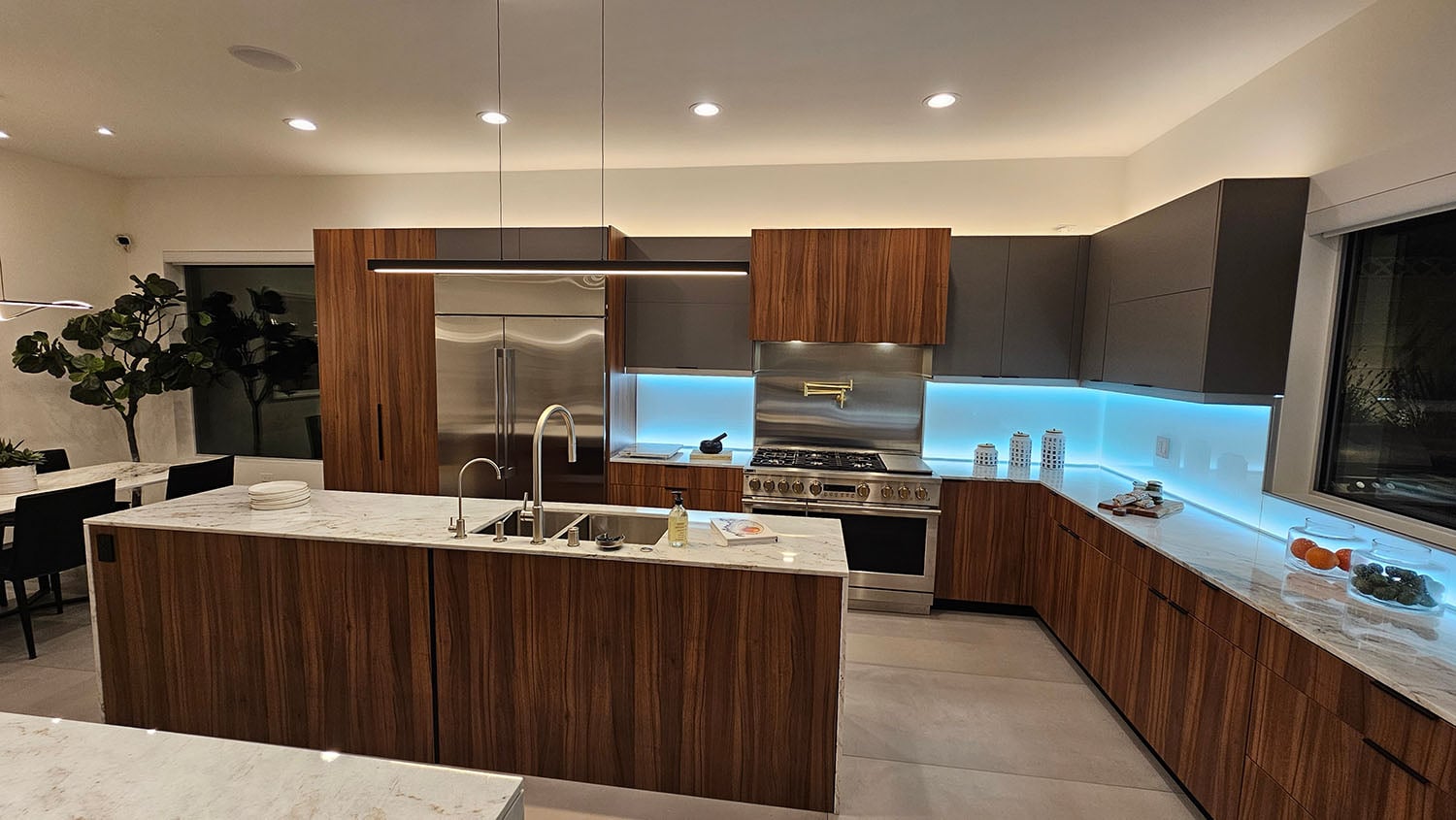
The shaker door and the flat slab door are the two cabinet styles that dominate contemporary kitchen design discussions. Both are described as timeless. Both appear in high-end renovations. Both are regularly called mid century modern in contexts where only one of them qualifies. The differences between them are specific and matter for anyone making a material decision about a kitchen or storage wall.
What Shaker Cabinet Doors Are
A shaker cabinet door is a five-piece construction: two vertical stiles, two horizontal rails, and one center panel. The frame is always visible on the face of the door. The shaker design originated with the Shaker religious communities of 18th and 19th century America, whose furniture-making tradition prioritized simplicity, quality of construction, and visible craft.
In contemporary kitchen design, shaker cabinet doors have become the most commercially flexible profile because they read as contemporary in a white kitchen, as farmhouse in a grey-green kitchen, and as transitional in almost any other setting. This versatility is the shaker style's strongest commercial quality and what makes it the most enduring style across the broadest range of kitchen types.
What Mid Century Cabinet Doors Are: Slab Door Panels
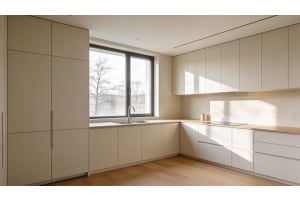
Mid century cabinet doors are flat slab doors. Slab door panels have no frame, no rail, no routed detail on the face. One flat surface from edge to edge. The door reads as a single material, which is the entire design intention.
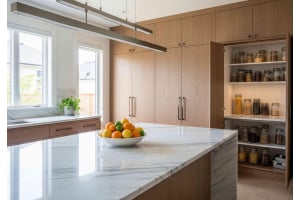
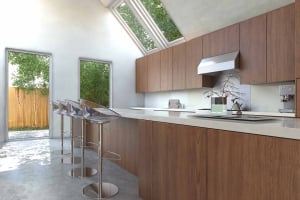
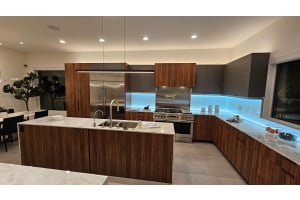
Flat panel doors work best when the material carries the visual weight. In a light oak wood veneer, the grain becomes the detail on the door face. In a matte lacquer, the color does the work. The door design itself disappears into the run of cabinetry rather than announcing its own construction. This is what distinguishes it from the shaker, where the frame is visible and intentional.
This is the profile used in light oak wood veneer slab cabinet doors at 27eStore: no separate panel, no visible construction on the face, grain running consistently from edge to edge across each door in the run.
How They Compare as Cabinet Styles in a Modern Kitchen
Shaker cabinets feature a visible frame that works across a wider range of kitchen styles. They are compatible with transitional, farmhouse, traditional, and contemporary designs, which makes them the safer choice for homeowners who are uncertain about direction or who expect to sell the property. The frame adds visual complexity that suits spaces with other traditional or decorative elements.
Flat panel doors work best in rooms committed to a contemporary or mid century direction. They suit clean architecture, good natural light, and a considered material palette. In the right context they produce a result that shaker cabinets cannot match. In a room with mixed decorative signals, the same flat door can feel under-resolved because it relies on the surrounding context to give it meaning.
The decision is not about which cabinet style is better. It is about which door serves the room. Shaker is more adaptable. The flat slab is more specific, and at its best, more rewarding.
Solid Drawer Fronts and Consistency
Solid drawer fronts are part of the slab aesthetic. In a cabinet run with flat slab doors, the drawer fronts continue the same profile: same material, same edge treatment, same hardware. Any variation breaks the visual rhythm that makes the flat slab wall work as a designed surface.
Shaker cabinets are less demanding about drawer front consistency. A shaker door alongside a flat drawer front is a common configuration in contemporary kitchens and reads as intentional rather than inconsistent. This is another dimension of the shaker design's flexibility that the flat slab profile does not share.
Is Shaker Style Mid-Century Modern?
Shaker is not mid-century modern. The shaker design predates mid century modern by over a century and originates from a completely different tradition. The shaker style is about visible quality of construction and functional simplicity. Mid century modern is about industrial materials, clean geometry, and a specific post-war design optimism. The two styles share some surface similarities but they are not the same thing.
The confusion arises partly because both styles are described as timeless and minimalist, and partly because some kitchens described as mid century modern use shaker doors. Those kitchens may be making other MCM choices. The doors are not mid century modern. A century kitchen that has shaker doors but MCM lighting, hardware, and material palette is a mixed-style kitchen rather than a genuine MCM one.
Choosing Between Flat Panel and Shaker
If the home has mid century modern architecture or the renovation goal is an unambiguous contemporary look, choose the flat slab. The material will carry the room and the profile will be consistent with the architecture.
If the goal is a kitchen that works across a range of furniture styles, suits the broadest possible buyer profile, and does not commit fully to a single aesthetic direction, the shaker is the lower-risk choice. It is a genuinely good door with a long track record.
If the question is which produces the more satisfying result in a mid-century modern or contemporary interior when well executed, the answer is the flat slab. It requires more commitment from the room, but that commitment, when met, produces a result that the shaker door cannot.
The five-piece method described above is not the only way the profile gets built. Shaker cabinet doors at 27estore come two ways: veneer doors with genuine rails and stiles, and lacquered doors routed from one piece of MDF, which removes the joints where painted shaker usually fails first. If the shaker profile suits the room but the traditional execution does not, that difference is worth knowing before you commit.
Frequently Asked Questions
Is shaker style mid century modern?
No. Shaker design predates mid century modern by approximately 150 years and comes from an entirely different tradition. The two styles share an aversion to decoration but differ in almost every other respect. A shaker door in a mid century interior creates a visual tension that the room has to work around rather than benefit from.
What is the most timeless cabinet door style?
Shaker has the longest documented track record as a recurring choice across design periods and kitchen types. The flat slab has been consistent for over 50 years in contemporary and mid century design and shows no signs of dating. Both are defensible as timeless, though for different reasons: shaker because of its flexibility, slab because of its commitment to an honest, unbroken surface.
What is the 1-3 rule for cabinet doors?
The 1-3 rule is a proportion guideline suggesting that open and closed storage, or upper and lower cabinet heights, should relate in roughly a 1-to-3 ratio for balanced visual weight. In practice it is a design principle rather than a formula: storage walls read better when there is a clear visual hierarchy between different elements, and the rule provides a useful starting point for establishing that hierarchy.
For people leaning toward the flat slab profile but working with a tighter budget or a practical need for higher moisture resistance, laminate mid century modern cabinet doors are worth examining closely before ruling them out as a lesser option.