Search for kitchen food storage and you get two very different answers. One is a piece of furniture you order, unbox, and push against a wall. The other is cabinetry planned into the room. Both solve the same problem, and the right choice depends less on budget than on how long you plan to keep the kitchen.
What Counts as a Freestanding Pantry
The category covers anything that stores food and is not attached to the structure of the room. In practice that ranges from a two hundred dollar particleboard unit to a solid wood hutch built by a furniture maker. Retailers file all of it under free standing kitchen storage furniture, which is why a single search returns both a modern flat panel cabinet and a painted farmhouse piece on the same page.
Freestanding Kitchen Furniture vs Cabinetry
Furniture is designed to be seen from all sides, sized to standard heights, and finished on the back and ends. Cabinetry is designed as part of a run, scribed to the wall, and finished only where it shows. That difference drives everything else: the furniture piece can move with you, and the cabinetry cannot, but the cabinetry uses the full height and depth of the space it occupies.
What a Free Standing Cabinet Is Called
Retailers use several names for the same object. You will see it listed as a kitchen pantry, a stand alone pantry, a storage cabinet, a kitchen cupboard, or occasionally as a hutch when it has a hutch top and open shelving above. Some are sold as dining room sets and repurposed for food storage. Searching more than one of these terms turns up stock the others miss.
Where a Standalone Unit Makes Sense
There are situations where a movable piece is plainly the better answer, and the case for it is stronger than cabinetry salespeople usually admit.
Rentals and Temporary Kitchens
If you cannot modify the room, this is the only option. It also suits a home you expect to leave within a few years, since you take the storage with you and leave nothing behind that a landlord can object to. The cost is low enough that replacing it later is not painful.
A Storage Cabinet in the Dining Area
Overflow storage does not have to live in the kitchen. A piece placed in an adjoining eating area handles bulk goods, serving pieces, and the machines you use monthly rather than daily. Furniture reads correctly in a dining room in a way that a run of kitchen cabinetry does not, and a rustic or painted finish can work deliberately as a contrast piece.
Where a Standalone Unit Falls Short
The limitations show up after a year of use rather than on delivery day, which is why they rarely appear in reviews.
Depth, Wall Clearance, and Wasted Space
Most units are shallower than base cabinetry and stop well short of the ceiling. The gap above collects dust and stores nothing. Baseboard prevents the unit from sitting flush against the wall, so it stands proud by an inch or two, and that gap is visible from across the room. In a kitchen where floor area is the constraint, giving up eighteen inches of depth to store less than a tall cabinet would is a poor trade.
Matching Existing Cabinetry
Getting a furniture piece to agree with your doors, finish, and hardware is difficult. White is the safest choice because it is the most common, but white varies more than people expect between manufacturers, and a slightly different white beside your existing cabinetry is more noticeable than an obviously different color. Solid wood pieces have the same problem with grain and stain.
Fixed Interiors and Shelf Spacing
A tall freestanding unit is usually built to one internal layout and shipped flat packed, so the pantry storage you get on day one is the pantry storage you keep. Cabinetry is specified before it is built, which is the practical difference behind everything else on this page.
Cheaper units ship with fixed shelves at set spacings. You get what the manufacturer decided, and the spacing is usually wrong for a stand mixer or a bread machine. Better pieces offer adjustable shelves, which is the single specification worth paying more for in this category.
Built In Alternatives with the Same Flexibility
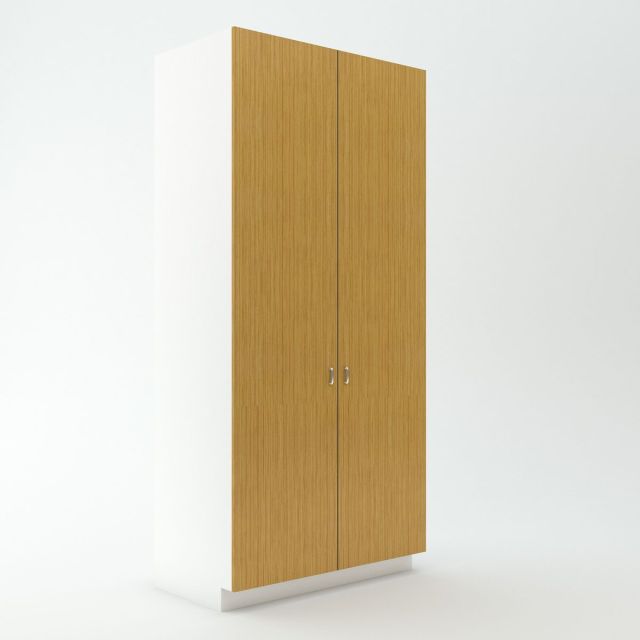
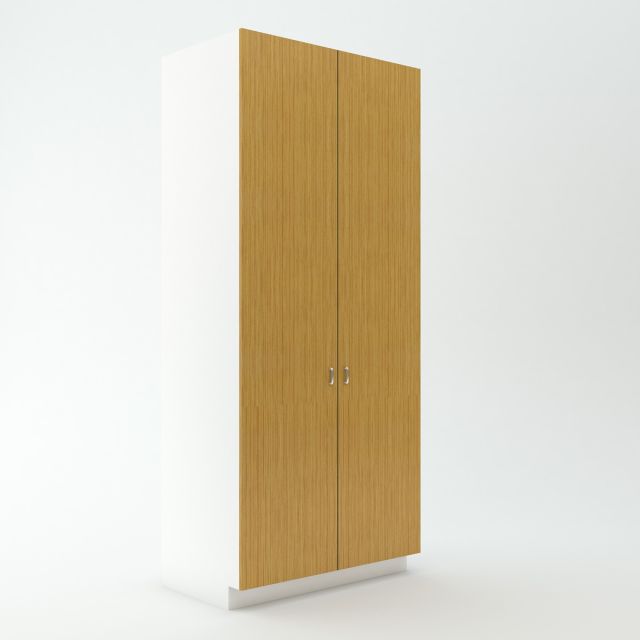
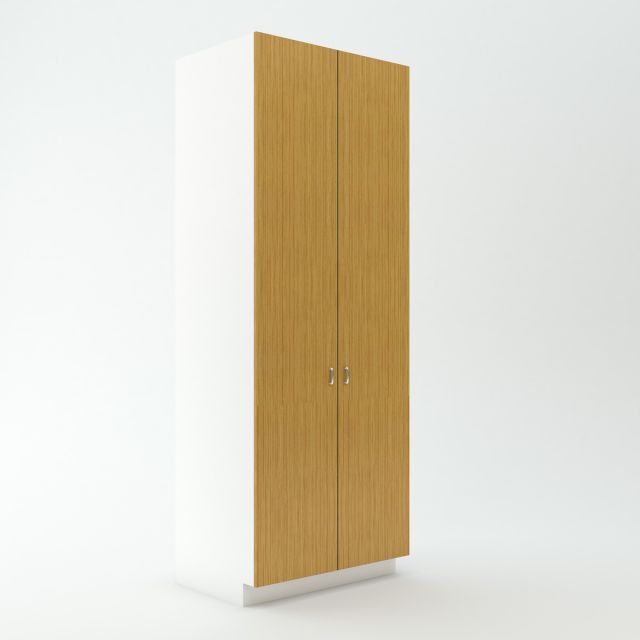
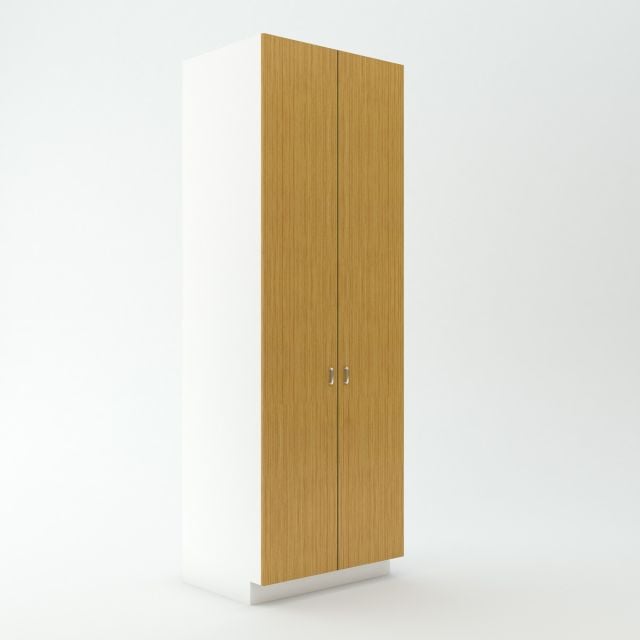
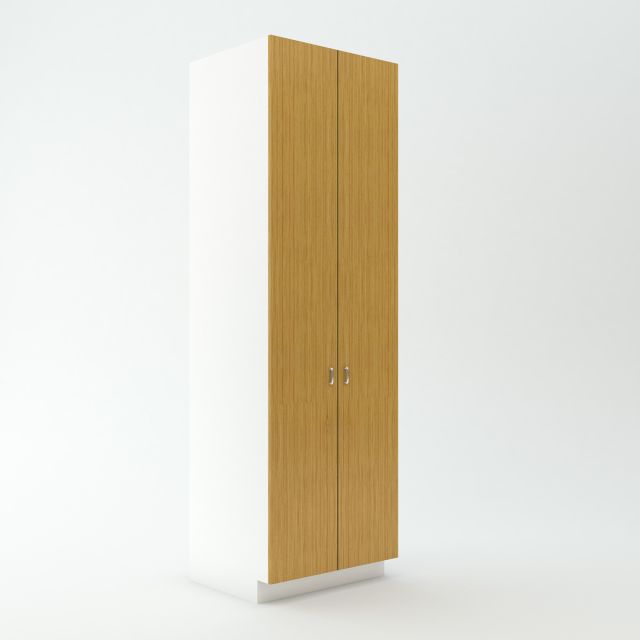
If you are already replacing or planning cabinetry, a tall unit does everything the furniture does and more, because it uses the full height of the room and matches the rest of the kitchen by definition. In a frameless European build the full width of the box is usable, since there is no face frame narrowing the opening. Our pantry cabinets are built to order, which means the interior is specified for how you actually cook rather than chosen from a short list.
Worth specifying on a tall unit:
- Adjustable shelves rather than fixed positions
- Interior drawers wherever depth would otherwise bury things
- A shelf at counter height if you want a coffee or breakfast station
- Full height fronts finished to match the rest of the kitchen
- Depth matched to your base cabinetry so the run sits flush to the wall
Finish is the other decision that separates the two routes. A furniture piece arrives in whatever white, wood tone, or painted finish the manufacturer offers. A made to order cabinet is finished to the same specification as the rest of the room, which matters most in a modern kitchen where the doors read as one continuous surface rather than as separate pieces.
Adjustable shelves are standard rather than an upgrade, and they matter more in a tall cabinet than anywhere else in the kitchen, because the contents change size constantly. Set narrow spacing for jars at eye level and wide spacing below for larger equipment and bulk goods.
Pull Out Fittings and Interior Drawers
Interior drawers and roll out trays behind full height doors are the practical answer to depth. Instead of reaching past a front row of items, you bring the contents out to you. This is the most requested interior configuration we quote, and it is what most people actually mean when they search for a pull out pantry.
Full Height Pull Out Units
There is also the full height version, where the entire interior frame slides out as one on heavy duty runners. It suits narrow widths between a range and a refrigerator and gives access from three sides at once. It is a more specialized order and less commonly chosen than interior drawers, but it is available and worth considering where the width is tight.
Small Appliance Storage
An appliance pantry is a tall cabinet planned around the machines that would otherwise live on the counter: the mixer, the coffee setup, the air fryer, the toaster. Deep lower shelves take the heavy items, a shelf at counter height gives you somewhere to use them, and everything closes away behind full height fronts.
Two practical notes. Power inside the cabinet is job site electrical work, so plan the outlet with your electrician during rough in rather than expecting it to arrive with the cabinet. And if you are housing full size built in appliances, an oven tower or an integrated refrigerator surround, that is a different cabinet type built for the appliance specification rather than a food storage unit.
For background on where this format came from and why European kitchens have treated it as standard for decades, see our explainer on what a larder is.
Frequently Asked Questions
What is a free standing cabinet called?
Depending on the retailer, a kitchen pantry, a stand alone pantry, or a hutch. They describe broadly the same object.
Which free standing kitchen pantry is best?
The one that fits the space you have and has adjustable shelving rather than fixed. Depth and shelf adjustability affect daily use more than material or brand. Measure the intended position first, including baseboard clearance.
Is a built in tall unit more expensive?
Usually yes on the cabinet alone, though it stores more per square foot of floor area and matches the rest of the kitchen. If you are already ordering cabinetry, the incremental cost of one more tall unit is smaller than buying a separate furniture piece.
How deep should it be?
Around twenty four inches works for most kitchens and matches base cabinet depth. Anything deeper buries items at the back unless you specify interior drawers or pull outs.
Can I order a built to order pantry in a custom color?
Yes. Because these are made to order rather than stocked, finishes and colors are selected at quote, which is the main practical advantage over buying a finished furniture piece off a shelf.